

(Sept. 27, 2013) Last week was a remarkable week in Washington.
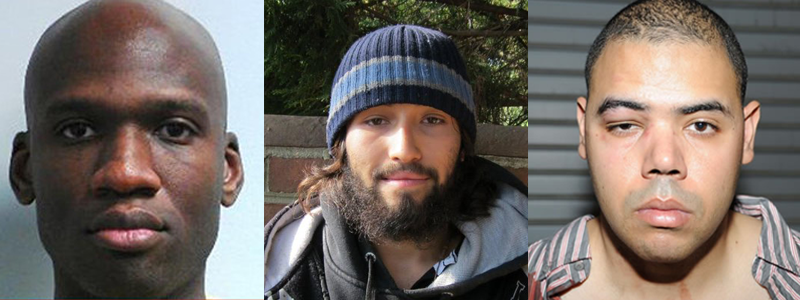 On Monday, September 16, Aaron Alexis, a 34-year old former Navy reservist, opened fire at the Washington Navy Yard, killing 12 people and injuring eight others. Five weeks before the shooting, Alexis had complained to the police in Rhode Island that people had been following him and “sending vibrations to his body” using a “microwave machine” to keep him awake. He was profoundly delusional – hearing voices that seemed to come through the walls, floor and ceiling of his hotel room. On the barrel of the gun he used for the shooting he engraved “My ELF machine,” referring to the extremely low frequency (ELF) electromagnetic radio waves, used by the Navy to communicate with submarines and which Alexis apparently thought the Navy was using to persecute him.
On Wednesday, September 18, Oscar Ortega-Hernandez pleaded guilty in federal court to having fired eight rounds from an assault rifle at the second and third floor of the White House in November 2011. One bullet hit a window but was stopped by the bulletproof glass. Another bullet narrowly missed a secret service agent on the White House roof. Mr. Ortega-Hernandez was a 21-year-old with a young son who came to Washington from Idaho Falls, Idaho. He had recently been telling people he was “the modern-day Jesus Christ that you all have been waiting for” and that President Obama had to be killed because he was “the Antichrist.” Ortega-Hernandez also believed that “the federal government was seeking to control Americans by implanting global positioning chips in children.” He will be sentenced on January 10 and faces up to 27 years in prison.
On Thursday, September 19, Floyd Lee Corkins, a 29-year old man from Herndon, Virginia, was sentenced to 25 years in prison in a U.S. District Court. Corkins had been convicted of shooting an unarmed security guard in August, 2012, at the Family Research Council in downtown Washington. Corkins had gone there to kill “as many people as possible” because he disagreed with the politics of the organization. Six months before the shooting, Corkins had been hospitalized for auditory hallucinations and “thoughts of killing his parents and conservative right-wing Christians.” He had been diagnosed with major depressive disorder with psychotic features and been started on antipsychotic medication but had not followed up with his most recent appointment.
The vast majority of people with serious mental illness do not become violent. Indeed, studies have repeatedly found they are no more dangerous than the general population.
However, a small subset of the estimated 7.7 million people living with the most severe mental illnesses is at risk for committing violence, most often to themselves by suicide but also to others. Once this happens, we find out – as we have about Alexis – that they had been hoisting red flags for weeks, months, even years. Time and again, we also learn that the warning signs were overlooked, ignored or inadequate to overcome the barriers to mental illness treatment that stood between them and recovery.
Perhaps the most remarkable thing about last week in Washington is that it is no longer remarkable. If we want fewer weeks like them, we must become more willing and able to recognize the red flags of untreated severe mental illness and remove the legal and other barriers that prevent us from acting on them.
To comment, visit our Facebook page.
Visit our blog archive to read all our recent posts.