

(Oct. 1, 2013) I had a heart attack this past January. The symptoms were mild, and I reacted to warning signs without delay. I knew something was wrong, and I sought help. On the other hand, tens of thousands of people with a major mental illness have literally no idea that they have a mental illness impairing their ability to function, interact, and behave within the expectations of society. Their world is a jumble of bizarre thoughts, beliefs, and perceptions.
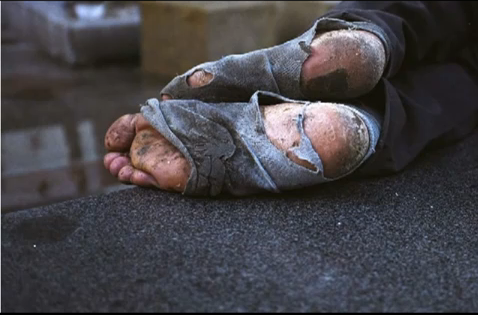 They attract our attention and evoke pity, but they scare and repel us. Sometimes they make us laugh when they do silly things, but it is a tragedy nonetheless. Seventy years ago they would have languished in an asylum, filthy with urine, unbathed, poorly clothed if at all. Forty years ago they would have lived in an institution in a pastoral setting, removed from the general population, likely overmedicated but bathed, fed and clothed for the most part. Now they live on the streets, smelling of urine, unbathed, poorly clothed if at all, and eating from trash cans. Progress?
They are out there because the policies have changed over the years, reacting to the poor treatment in institutions in the early part of the twentieth century. State hospitals have reduced their censuses dramatically over the past 40 years. Don’t get me wrong, many people have benefited from the changes. Community services have expanded over the same period. Medicine available to treat psychotic disorders has improved dramatically over the last 40 years. Many people, who could not live independently in the past, now can. But not all people respond well to medicine, and a subset of people with mental illness also have a condition known as anosognosia, which prevents them from understanding that the intrusive thoughts, voices, and paranoia they are experiencing are not real. They are the majority that ends up on our streets due to mental illness. They are the homeless problem that will probably not go away until we change some of the policies and make it easier to intervene.
Please stand up for homeless people with serious mental illness. Please demand a review of policies that allow people to languish on the street without care.
The problem as I see it is:
- Not enough quality housing. There is a waiting list.
- Not enough emergency care. The hospitals are rewarded for discharging people in a week whether or not they are better.
- A system that has become jaded over the years by laws and policies that hamstring it, including impossible caseloads an documentation requirements that leave the case worker working on reports more than seeing people.
- Most important, a system that has to rely on voluntary compliance from people who do not understand that they need help.
Gunther Stern
Georgetown Ministry Center
To comment, visit our Facebook page.
Visit our blog archive to read all our recent posts.