

(May 29, 2014) High-profile tragedies make the news and call into question the best ways to ensure access to treatment for people with severe mental illness. But often overlooked are the smaller, everyday tragedies that don't make national headlines.
Joann Kennedy, a 51-year old who has battled schizophrenia, homeless and multiple jail stays has cost Texas nearly $1 million dollars in care, reports Andy Pierrotti for ABC News. She is one of the frequent fliers revolving between the criminal justice system, homelessness and psychiatric hospitals who most likely will never become violent but needs help nonetheless (“Defenders investigation: The cost of troubled minds,” May 29).
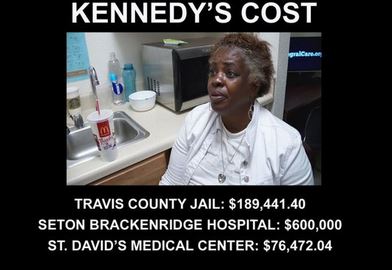 Over a 20-year period, Kennedy spent nearly 1,500 days behind bars and was admitted to the emergency room 326 times - at a cost to taxpayers of $676,472. This total doesn't even include court costs, medical services costs or law enforcement costs.
Kennedy’s story once again demonstrates that putting people with mental illness in jails isn’t saving taxpayers any money. It also isn’t surprising that when she did get help, it came from the criminal justice system or other places that the chronically mentally ill end up when they are locked out of treatment.
Texas has only 19 percent of the beds necessary to meet the needs of its population. Texas was awarded a C for its ability to divert people with serious mental illness from jail and an F for its use of laws that would allow people with severe mental illness to receive mandatory treatment.
We have said over and over again, the institutions most likely to be treating people with mental illness are not hospitals, but jails and prisons. In fact, our recent study on the subject found the largest mental health institutions in 44 of 50 states are jails or prisons.
With one million dollars at stake for patients like Kennedy, isn’t it time we look at real solutions to helping the most vulnerable among us? We must begin by maintaining a functional public mental health treatment system so people with mental illness do not end up in prisons and jails.
To comment, visit our Facebook page.
Visit our blog archive to read all our recent posts.