

(Feb. 23, 2015) Paton Blough, 38, spoke candidly to a Senate subcommittee last week about the criminal acts he committed while suffering from untreated bipolar disorder and urged support for a proposal that would establish more mental health courts in South Carolina (“More mental health courts could open in S.C.,” Bluffton News, Feb. 19).
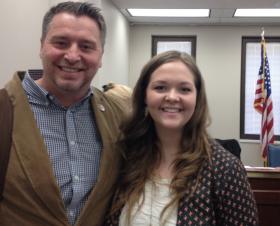 “It’s actually kind of a miracle that I’m here today,” Blough said.
Blough attended mental health court after amassing nine criminal charges as a result of his mental illness, and credits it with helping him obtain treatment and live free of psychosis for five years.
“In my paranoia, I’m thinking, ‘well, they’re going to kill me,’” said Blough, describing his psychotic break. “Eventually, without sleep for several days, it becomes almost warfare, where you think half the people are against you and following you. It gets very, very bizarre.”
Blough is a clear example of the impact mental health courts could have on rehabilitating mentally ill offenders. He is now a state board member for the National Alliance on Mental Illness and teaches law enforcement how to interact with suspects with mental illness.
“A lot of what we train is just human kindness,” he said.
Those with a serious mental illness represent less than 4 percent of the general population but 17 percent of the South Carolina prison population.
Sen. Vincent Sheheen introduced the legislation in an effort to change these startling statistics.
“If you go into any hospital today, if you go into any jail today, you’ll see warehoused folks who are mentally ill who are in the revolving system,” Sheheen said. “It’s not good for them, and it costs taxpayers a lot of money.”
South Carolina received an F grade in the Treatment Advocacy Center’s state survey of mental health diversion practices. Although not a substitute for assisted outpatient treatment (AOT), mental health courts can be a valuable intervention tool once an individual has entered the criminal justice system.
Indeed, increasing the number of mental health courts in South Carolina is not only the smart thing to do; it is the kind thing to do.
To comment, visit our Facebook page.
Visit our blog archive to read all our recent posts.
“It’s actually kind of a miracle that I’m here today,” Blough said.Blough attended mental health court after amassing nine criminal charges as a result of his mental illness, and credits it with helping him obtain treatment and live free of psychosis for five years.
“In my paranoia, I’m thinking, ‘well, they’re going to kill me,’” said Blough, describing his psychotic break. “Eventually, without sleep for several days, it becomes almost warfare, where you think half the people are against you and following you. It gets very, very bizarre.”
Blough is a clear example of the impact mental health courts could have on rehabilitating mentally ill offenders. He is now a state board member for the National Alliance on Mental Illness and teaches law enforcement how to interact with suspects with mental illness.
“A lot of what we train is just human kindness,” he said.
Those with a serious mental illness represent less than 4 percent of the general population but 17 percent of the South Carolina prison population.
Sen. Vincent Sheheen introduced the legislation in an effort to change these startling statistics.
“If you go into any hospital today, if you go into any jail today, you’ll see warehoused folks who are mentally ill who are in the revolving system,” Sheheen said. “It’s not good for them, and it costs taxpayers a lot of money.”
South Carolina received an F grade in the Treatment Advocacy Center’s state survey of mental health diversion practices. Although not a substitute for assisted outpatient treatment (AOT), mental health courts can be a valuable intervention tool once an individual has entered the criminal justice system.
Indeed, increasing the number of mental health courts in South Carolina is not only the smart thing to do; it is the kind thing to do.
To comment, visit our Facebook page.
Visit our blog archive to read all our recent posts.