

(June 2, 2016) A homeless Massachusetts man with a long history of violent episodes and hospitalizations resulting from untreated mental illness pled guilty this week to the 2011 murder of a homeless shelter employee (“Man pleads guilty in homeless shelter murder,” Boston Globe, May 31).
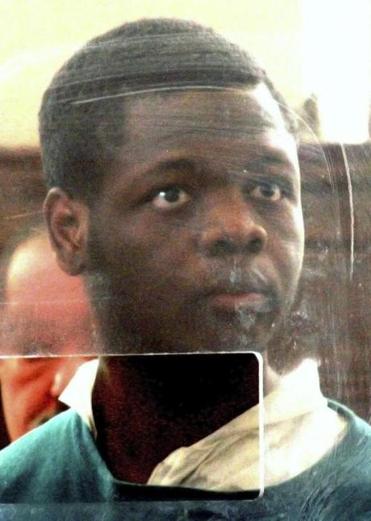 Pericles Clergeau, 24, stood in court Tuesday and addressed the family of Jose Roldan, a 34-year-old employee of the homeless shelter where Chergeau once lived whom he fatally stabbed over five years ago.
“I’m not very good with words,” Clergeau said. “I’m sorry for your loss. I’m sorry for taking that loss. I will try to be a better person.”
Diagnosed with schizophrenia, Clergeau has a record of psychotic episodes and hospitalizations beginning in childhood. Growing up in Massachusetts, Clergeau bounced from facility to facility. He assaulted fellow psychiatric patients, school staff and mental health workers and destroyed property.
But despite his violent past, Westborough State Hospital discharged Clergeau in 2010. Less than a year later, Clergeau was sitting in the common area of a local homeless shelter, unmedicated and delusional. He accused Roldan and another shelter employee of talking about him.
Roldan walked over to calm Clergeau down, but as he knelt in front of him, Clergeau pulled out a knife and stabbed him in the neck. Roldan lost consciousness and was rushed by helicopter to the hospital, where he died a few hours later.
On Tuesday, Clergeau’s attorney, Keith Halpern, delivered a scathing indictment of a mental health care system that knew for years that Clergeau posed a major risk and yet failed to properly treat him prior to Roldan’s death.
“It didn’t have to happen,” Halpern said. “It wasn’t a surprise that there was another violent episode.”
Over the past year, Halpern said, medication and treatment stabilized Clergeau, enabling the trial to go forward.
It’s incredibly tragic that it wasn’t until Clergeau had killed someone and was incarcerated that he was finally medicated and able to stabilize.
How was someone with a track record like Clergeau’s able to continue falling through the cracks? Surely during one of his stints in a psychiatric hospital someone recognized Clergeau’s obvious need for continuing care.
A new Treatment Advocacy Center study on the national psychiatric bed shortage provides some insight. The study reveals that Massachusetts has only 8.6 public psychiatric beds per 100,000 people, just 17.9% of the 50-bed standard considered minimally adequate.
Until Massachusetts addresses its psychiatric bed shortage—and adopts an assisted outpatient treatment (AOT) law, for that matter—preventable tragedies like this will inevitably continue.
Read “Going, Going Gone: Trends and Consequences of Eliminating State Psychiatric Beds” to learn more.
To comment, visit our Facebook page.
Visit our blog archive to read all our recent posts.