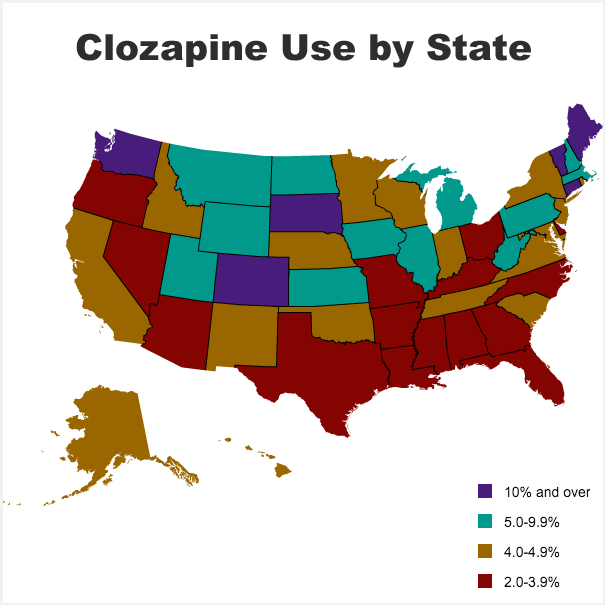
(Nov. 1, 2016) In the medicine cabinet of serious mental illness drugs, clozapine - trademarked Clozaril - occupies a number of unique positions.*
It is the only antipsychotic approved by the Food and Drug Administration for the treatment of psychosis, the only one approved for suicide prevention, the most effective antipsychotic for treatment-resistant patients and the only psychotropic medication found to reduce the risk of violence.
Yet clozapine may well be the most underused proven medication for schizophrenia and other psychotic disorders on the US shelf, and its use has been falling. In 2008, the drug was prescribed to roughly 4% of the individuals with treatment-resistant psychosis, its primary candidates, down from 11% in 1999. Even that was a fraction of the 35% of the same population who receive prescriptions in Australia or the 30% in China, 23% in England, 22% in Sweden and 20% in Germany.
In the first of eight new briefs on the use of technology in behavioral health, the National Association of State Mental Health Department Directors (NASMHPD) is attempting to change that picture by identifying and proposing strategies for reducing barriers to its use.
Underused But Not Because of Patient Opposition
"Given clozapine's efficacy, it should not be relegated to third-line treatment only after many years of poor symptom control and functioning," according to the authors of "Clozapine underutilization: Addressing the barriers." In particular, they write, "The early use of clozapine is critical for young patients with schizophrenia who are treatment-refractory and for whom only clozapine offers a chance for improvement and course stabilization as the basis for recovery."
The biggest barriers to the drug's wider use are associated with its side effects, some of which, in very rare cases, can be life-threatening. The NASMHPD assessment maintains that "Often ignored in risk-benefit discussions are the psychiatric and medical risks of not using clozapine," including the use of unproven medication strategies that may have even greater risks.
Notable for individuals actually living with psychotic symptoms and the people around them, none of the barriers originates with patients themselves. In fact, the report says prescribers overestimate patients' unhappiness with many side effects. Patients, in fact, have "more favorable attitudes toward clozapine treatment than prescribers expect," the authors write.
The literature reports findings that as many as 86% of patients report feeling better on the medication, and 89% prefer it to other antipsychotics, according to the report. Studies have found the drug associated with higher patient satisfaction ratings than alternatives.
Removing Barriers
The 25-page assessment identifies six barriers that limit use of drug:
- Lack of prescriber knowledge and confidence
- Negative prescriber attitudes
- Special monitoring requirements
- Administrative factors
- Lack of preparation by health systems
- Inadequate understanding or acknowledgement of "clozapine's unique nature" by policy makers and payers.
Thirty-four specific recommendations are made to reduce these barriers. These include specifics for:
- Prescribers: tactics for improving knowledge about clozapine management and side effects
- Training programs: urging to include training in psychiatric residents and other programs
- Acute care and psychiatric hospitals: four proposed policies for assuring clozapine is available and continued for patients already on it
- Researchers: neuroscientific and pharmacologic research topics to improve understanding of clozapine's mechanisms and side effects
- Local and state health authorities: policies to promote "ready access" and safe monitoring of clozapine to qualifying patients, model clozapine programs, protocols for starting clozapine in community settings
- Payers: inclusion of clozapine as a preferred medication on pharmacy drug lists of all state Medicaid and managed-care programs
- Technology: use of telehealth, call centers, the clozapine registry, web-based educational tools and other technologies.
"If access to clozapine is improved, millions of patients could benefit," the paper concludes. "In turn, their improved care would result in substantial cost savings to the entire health care system."
Doris A. Fuller
Chief of Research and Public Affairs
*The Treatment Advocacy Center does not accept funding from companies or entities involved in the sale, marketing or distribution of pharmaceutical products.
Next Week: New Studies on the "Scourge" of Bed Shortages
Research Weekly is a summary published as a public service of the Treatment Advocacy Center and does not necessarily reflect the findings or positions of the organization or its staff. Full access to research summarized may require a fee or paid subscription to the publications.
To comment, visit our Facebook page.
Visit our blog archive to read all our recent posts.